
Wellness Journal for Men in Indonesia
The Journal collects practical writing on the things that decide whether a supplement helps or does nothing: food, water, sleep, training, and heat. No motivation speeches, no miracle routines. Just what tends to work here, in this climate, for men with normal schedules.

Why Habits Come Before Capsules
A supplement fills gaps. If your diet is chaotic and your sleep is short, the gap is too large for a capsule to close, and you will conclude that supplements do not work. A natural supplement for men in that position has almost nothing to add, because the basics it depends on are not there in the first place.
Fix the basics first and the same product starts to show its value. That is the editorial rule behind every article here. We write about nutrition, hydration, and rest before we write about dosages, and we keep vitamins and minerals for men in that order too: what the day already supplies, then what a capsule is asked to top up.
If an article here asks you to buy something before it asks you to eat, drink, or sleep better, we have written it wrong.
- Food and protein sources Read first
- Water and electrolytes Daily
- Sleep timing and screens Recovery
- Capsules and dosages Later
The order is not a ranking of importance. It is the order in which changes tend to hold, which is why the capsule chapter comes last in most article series.
Eating Well on an Indonesian Schedule
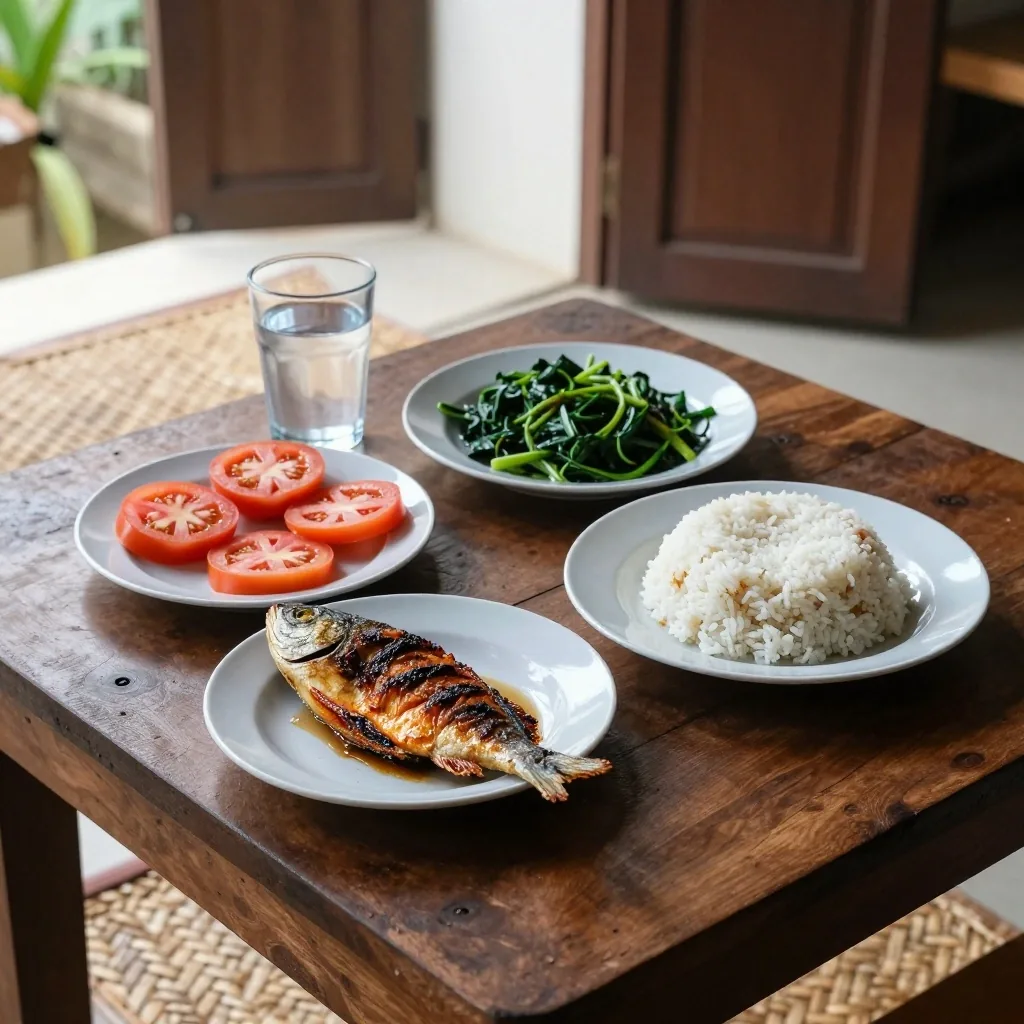
Long commutes, late dinners, and warung food are not obstacles to eating decently, but they do require a plan. The Journal covers simple protein sources available everywhere, how to build a plate without weighing anything, and how to handle the days when you eat out twice.
Nothing here demands a special kitchen or imported ingredients. If a habit needs equipment you do not own, it does not belong in the article. That test removes most of the fashionable advice and leaves the parts you can actually repeat on a Tuesday after a long ride home.
- Eggs, tempeh, tahu, and grilled fish appear in almost every protein article, because they are already near you.
- A plate is built by eye: one palm of protein, one fist of rice, two hands of vegetables. No scale involved.
- Two restaurant meals in one day has its own article, with the practical trade-offs spelled out rather than scolded.
Hydration in a Tropical Climate
Bali's humidity makes dehydration easy to miss, because you often do not feel thirsty while you are losing fluid. The Journal covers daily water targets, when electrolytes are worth adding, and why coffee and sweet drinks do not count toward the same number. If you work outdoors or train in the afternoon, this is the section to read first. It is also the cheapest improvement to daily energy and endurance available to most men.
Sleep, Screens, and Recovery
Sleep is where recovery happens, and it is the first thing men sacrifice. The articles here deal with practical fixes rather than bedtime theory, and they assume a normal working week with early starts and late finishes.
A consistent wake time
The one variable you can hold steady while everything else moves. Articles cover the first two weeks, when it feels worse before it feels better.
Dim the screens earlier
Practical rules for the last hour, written for people who will not switch the phone off entirely and want advice that survives that reality.
A room cool enough to stay asleep
In a tropical house the thermostat is often the reason for the 3am wake-up. The articles cover airflow, bedding, and what actually helps.
Cut caffeine after mid-afternoon
Coffee culture here is strong, so the articles work with it instead of against it: a cutoff hour, and swaps that still taste like something.
Magnesium comes up in this context, but as a small contributor, not a solution, and only alongside a real sleep schedule. If you sleep six hours a night, no supplement will compensate, and the Journal will keep saying so.
Movement for Men Who Sit All Day
Desk work in Jakarta and Denpasar leaves a specific set of problems: tight hips, weak back, low daily step counts. The Journal covers short routines that fit into a working day, walking targets that are actually achievable, and how to start strength training without a gym membership.
For men who already train, there are articles on structuring a week and on resting properly between sessions. Movement and recovery swap places in the schedule more often than people expect, so both topics sit next to each other here.
Two mobility breaks and a mid-afternoon walk, sized to fit between meetings rather than replacing the lunch hour.
How to spread strength, conditioning, and rest across a normal week without doubling up on the hard days.

Reading Labels and Ingredient Panels
Several Journal articles walk through how to read a supplement label. This is where the site's buying advice lives in long form: what a clear panel tells you, and which habits of unclear panels should make you put the box back on the shelf.
Quantity per capsule
A number per capsule is not the same as a number per dose. Articles show where the two get quietly mixed, so natural capsules for strength and vitality can be compared on the same terms.
Serving size
How many capsules make a serving, how often the panel expects you to take it, and how long a single bottle is meant to last at that pace.
Ingredient order
The order tells you what is present in quantity and what is present in a sprinkle, which matters more than the length of the ingredient list.
Blends without numbers
A named blend with one combined figure hides every individual amount. The articles treat this as a warning sign rather than an automatic disqualification.
Storage instructions
Humidity is hard on capsules. Where a bottle is meant to be kept, and what the panel says about heat, tells you how seriously the maker treats the product.
Intended use wording
A panel should describe a dietary supplement in plain language. If the wording reads like a medical promise, treat that as a reason to slow down and compare elsewhere.
Read two of these articles and you will evaluate popular products for men in Indonesia faster than most people selling them. Supplements are not medicines; if you take prescription medication or manage a health condition, speak with a qualified professional before adding anything to your routine.
A Journal article earns its place by being useful on a normal working day, not by being impressive on the page.
How the Journal Fits the Rest of the Site
Articles link back to product categories when a specific ingredient is relevant, and to How to Choose when the topic is comparison. We do not publish sponsored articles, and we do not rank products by payment. If an article mentions a PrimaVita product, it is because the ingredient matters to the topic.
New pieces are added regularly, so check back rather than reading everything at once. The site keeps healthy lifestyle products and the writing about them in one place, which makes it easier to see how a routine fits together over a season.
Suggesting a Topic
If there is something you want covered, send it to [email protected] or call +62 361 731 7872. Questions from customers shape the calendar more than search trends do, partly because they are more specific.
If several men ask the same thing, it becomes an article. That is the whole editorial process. Messages about men's health support, daily energy, or how a product fits an existing routine are all read and sorted into the same list.
Print and packaging describe these products as dietary supplements, not medicines. They are intended to sit alongside food, water, sleep, and movement, and they are not a replacement for advice from a qualified professional.